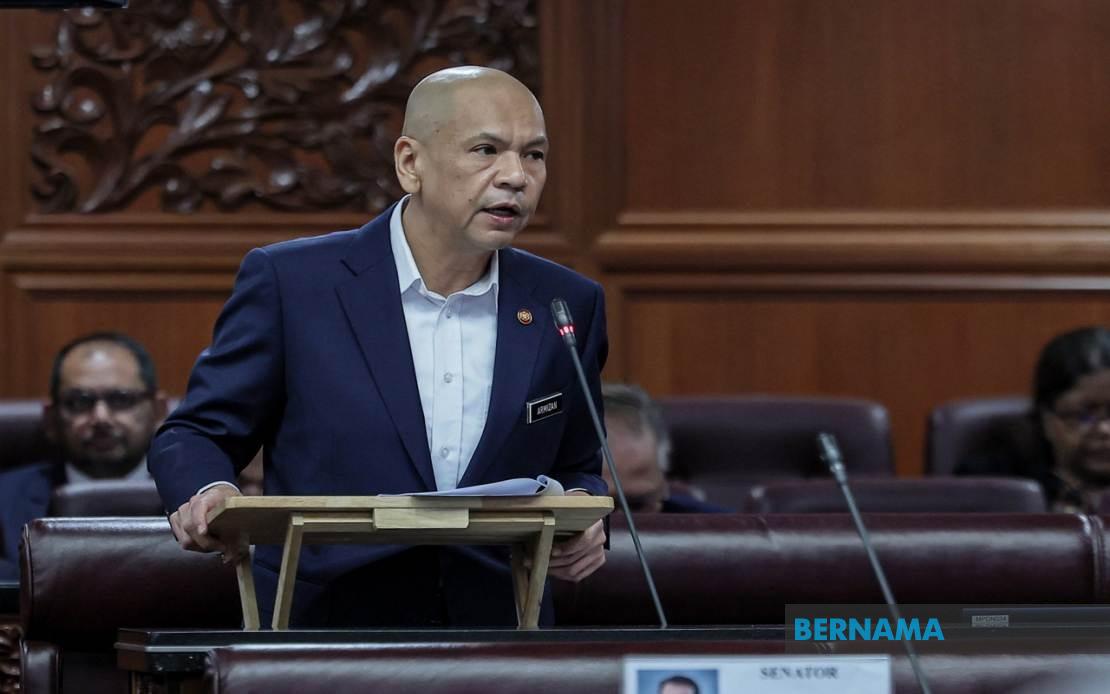
Malaysia's government-backed discount sales initiative has achieved nationwide coverage in its first six months of operation this year, with the Ministry of Domestic Trade and Cost of Living reporting 15,881 Rahmah MADANI Sales Programme events held between January and June. Domestic Trade Minister Datuk Armizan Mohd Ali disclosed the figures during parliamentary question time, underscoring the administration's commitment to maintaining regular price-reduction campaigns as a counter-measure against inflation and rising household expenses across the country.
The programme's reach now extends to all 600 state constituencies and encompasses every one of the 40 Federal Territory zones spread across Putrajaya, Kuala Lumpur, and Labuan, demonstrating a comprehensive rollout that bridges urban and rural market gaps. This universal coverage marks a departure from previous government bargain initiatives, which operated on an irregular basis without systematic geographic targeting. The data reflects only the first half of the calendar year, with Armizan indicating that implementation would accelerate further during the remainder of 2025 to meet revised targets.
The expansion represents a dramatic scaling-up compared to historical benchmarks. Sales events numbered 6,870 in 2023, jumped to 12,419 the following year, and the government projects the figure will climb to 25,708 by year's end. Originally earmarked for 23,040 events in 2025, the Ministry adjusted its target upward to 30,000 following Prime Minister Datuk Seri Anwar Ibrahim's public announcement in May that elevated the initiative's prioritisation. The policy shift reflects deepening concerns about household purchasing power in an environment marked by supply-chain disruptions and elevated commodity prices stemming from regional geopolitical instability.
The structural transformation of Rahmah MADANI demonstrates the government's intent to institutionalise price-relief interventions rather than treat them as temporary expedients. Since 2023, policymakers have implemented five integrated strategies designed to embed the programme permanently into the fiscal and administrative machinery. First among these is the formal integration of sales events into the annual national budget commencing 2024, with dedicated activity codes and ringfenced funding allocations that guarantee resource availability independent of year-to-year appropriations fluctuations.
The second pillar establishes binding annual quotas and scheduling timetables customised for each constituency and zone, eliminating the unpredictability that characterised previous government sales. This structured approach allows residents to anticipate when discount events will occur in their localities, enabling household budgeting around known shopping opportunities. By contrast, earlier ad hoc arrangements often surprised the public with sporadic events, limiting their utility as a consistent cost-management tool for ordinary families contending with mortgage payments, utility bills, and essential goods expenditures.
Private-sector mobilisation constitutes the third strategic pillar, with government outreach securing 2,695 retail partners as of late June. These include supermarket chains, shopping mall operators, convenience stores, and consumer cooperatives that voluntarily participate in the sales framework, leveraging their supply networks and customer bases to amplify the programme's impact. This public-private collaboration approach distributes implementation responsibilities beyond government agencies, reducing administrative burden whilst expanding the scope of merchandise available at discounted prices. The breadth of retail participation suggests genuine commercial interest in the initiative, potentially because the events drive foot traffic and customer acquisition during promotional periods.
Distribution methodology constitutes the fourth strategic element, with the government employing three complementary delivery mechanisms to serve diverse geographic and demographic segments. In-store sales occur within established retail premises, whilst open-air markets and mobile vending units bring discounted goods directly to communities lacking convenient access to shopping centers, particularly in rural and remote territories. Beyond these permanent formats, themed events aligned with paydays, school holidays, and cultural celebrations create demand spikes that encourage participation and allow vendors to clear seasonal inventory, benefiting both consumers and participating businesses through aligned commercial incentives.
The fifth innovation, introduced for 2025, represents a significant improvement in public communication and transparency. The launch of a dedicated Rahmah MADANI calendar provides residents with advance notice of dates, times, and precise locations for every scheduled event in their constituency or zone. This enables households to coordinate their shopping strategically, plan transportation, and allocate household budgets efficiently around known discount opportunities. For rural and remote communities often underserved by conventional retail, advance scheduling is particularly valuable, allowing families to consolidate shopping trips and maximise savings on bulk purchases during promotional windows.
For Malaysian consumers, the programme represents a tangible government response to documented concerns about living costs, which have emerged as a principal electoral consideration across demographic segments and geographic regions. Cost-of-living pressures have intensified pressure on household finances, particularly affecting middle and lower-income earners already navigating elevated housing, food, and energy expenses. The frequency and scale of discount sales events provide psychological reassurance alongside practical savings, signalling institutional commitment to affordability maintenance even as global commodity markets and supply-chain factors push prices upward beyond direct government control.
The regional context amplifies the programme's significance for Southeast Asia's largest economy. Malaysia's vulnerability to global supply disruptions and currency fluctuations means that import-dependent household staples face periodic price pressures independent of domestic policy decisions. By creating predictable intervals of government-facilitated discounting, authorities provide households with relief windows whilst signalling to domestic and international markets that price stability remains a policy priority. The approach complements monetary and fiscal instruments, offering a targeted intervention specifically designed to address retail-level affordability rather than relying exclusively on interest-rate adjustments or taxation mechanics.
The sustainability of this initiative hinges on maintaining private-sector participation and ensuring that discount margins remain economically viable for retailers whilst delivering meaningful savings for households. Balancing these commercial incentives represents an ongoing administrative challenge, particularly if commodity prices spike unexpectedly. Nevertheless, the government's commitment to expanding event frequency to 30,000 annually suggests confidence in the model's viability and public reception. For Malaysian policymakers, the programme exemplifies a hands-on approach to cost-of-living management that acknowledges limitations of macroeconomic policy tools alone in addressing household purchasing power concerns.

