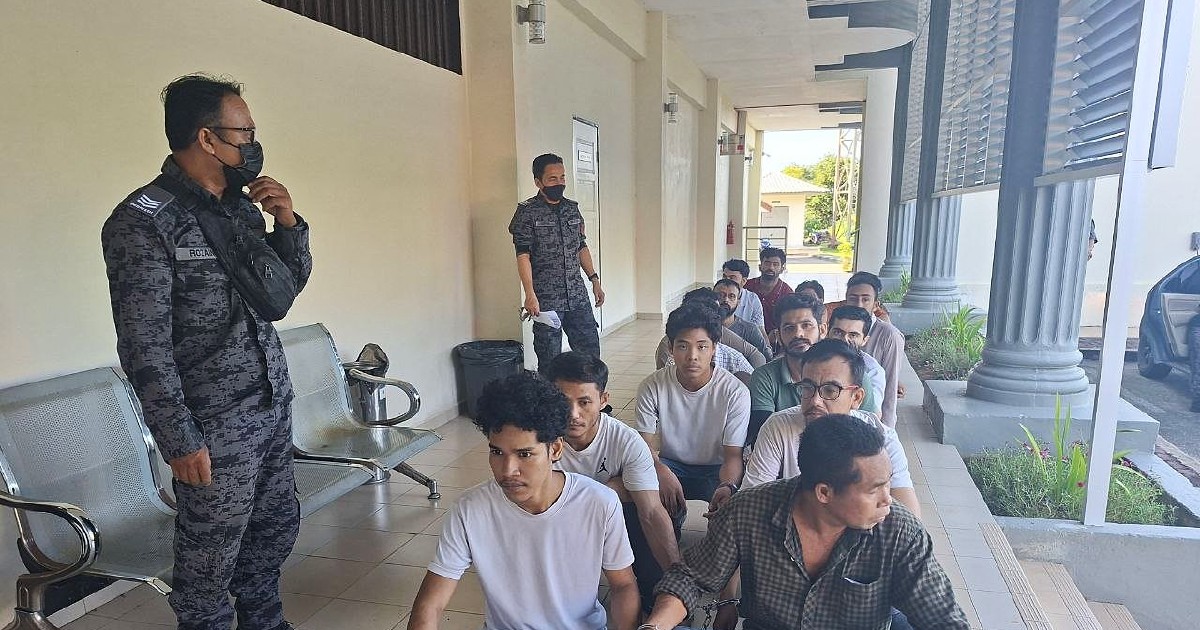
Fourteen foreign men were arraigned at Pasir Mas Sessions Court in Kelantan today, facing charges related to serious immigration violations including unlawful entry into Malaysia, remaining in the country beyond the validity of their permits, and fraudulent misuse of travel documentation. The case underscores the persistent challenge immigration authorities face in monitoring and apprehending foreign nationals who breach Malaysian entry requirements and residency conditions.
Immigration breaches remain a significant concern for Malaysian authorities, particularly in border-adjacent states where enforcement becomes more complex. The Kelantan operation demonstrates the government's ongoing commitment to monitoring foreign populations and responding to violations through the judicial system. These charges carry serious legal consequences and reflect the Immigration Department's zero-tolerance approach towards individuals who circumvent immigration procedures or exploit loopholes in the documentation system.
The Sessions Court jurisdiction for these cases indicates the severity with which Malaysian courts treat such violations. Unlike minor infractions handled by immigration tribunals, illegal entry and overstaying charges can result in substantial fines, imprisonment, or both, depending on the circumstances and history of each individual. Additionally, those convicted typically face deportation orders preventing re-entry for extended periods, effectively blacklisting them from future legal residency or employment in the country.
Passport and travel document misuse represents a particularly troubling dimension of immigration violations. When foreign nationals falsify, alter, or misrepresent their permits and visas, they not only circumvent legitimate entry procedures but also compromise the integrity of Malaysia's immigration system. The misuse category suggests these individuals may have presented forged documents, used documents belonging to others, or made false declarations about their purpose of stay, each constituting distinct criminal offences under the Immigration Act.
Kelantan's position as Malaysia's gateway to Thailand makes it a strategic location for immigration enforcement. The state experiences significant cross-border movement, creating opportunities for both inadvertent violations and deliberate smuggling networks. Heightened activity in this region often correlates with broader patterns of illegal migration, human trafficking, and document fraud that affect multiple Southeast Asian countries. The cases brought before Pasir Mas court likely represent a subset of detected violations, with many others potentially unreported or undetected.
Foreign workers constitute a substantial portion of documented immigration violations in Malaysia. While legitimate migrant workers are essential to various economic sectors, a parallel economy of undocumented and overstaying workers operates in construction, agriculture, domestic service, and manufacturing. These individuals often face exploitation by unscrupulous employers who withhold wages, confiscate documents, and provide substandard accommodation. The criminal charges suggest these fourteen men were either genuinely unaware of their violations or were knowingly participating in unlawful employment arrangements.
The overstaying component of these charges reflects a common scenario where initial legal entry deteriorates into illegal residency. Visitors granted social visit passes, business travellers, or workers whose employment arrangements terminated often remain beyond their permitted duration. Whether this results from administrative oversight, deliberate evasion, or unforeseen circumstances affecting departure plans, overstaying carries serious consequences including fines up to RM10,000 and imprisonment of up to six months under standard provisions, though compound charges typically increase penalties.
Important context exists regarding enforcement disparities across Malaysia's peninsular and East Malaysian regions. While central and major urban areas benefit from more concentrated immigration resources, border states and smaller towns like Pasir Mas may experience lower enforcement visibility, potentially creating environments where violations flourish. The court appearance of these fourteen individuals may result from either intensive recent operations or from accumulated cases finally processed through the judicial system, indicating authorities are gradually addressing backlogs.
The implications for Malaysian employers are substantial. Companies hiring foreign workers must verify legal status, ensure proper documentation, and maintain compliance with employment regulations or face substantial penalties themselves. These prosecutions serve as cautionary reminders that tolerance for immigration violations comes with significant legal and financial consequences. Employers who knowingly engage undocumented workers risk fines, reputational damage, and potential criminal liability alongside the foreign workers themselves.
Regional cooperation on migration management becomes increasingly critical as these cases demonstrate. ASEAN member states share common challenges regarding irregular migration, document fraud, and cross-border movement. Intelligence sharing between Malaysia and neighbouring countries could potentially intercept violations before they occur, though practical implementation faces numerous obstacles including divergent legal standards, language barriers, and coordination challenges. The Kelantan cases suggest that unilateral enforcement remains the primary available approach currently.
For Malaysian communities, particularly those in proximity to affected regions, understanding immigration law remains essential. While the fourteen men charged face serious legal consequences, society benefits from consistent enforcement that deters deliberate violations and maintains the integrity of Malaysia's immigration framework. The rule of law requires that immigration statutes apply equally regardless of nationality, and court proceedings like those in Pasir Mas reinforce that principle.
Looking forward, these prosecutions contribute to an evolving data pool that helps authorities identify patterns in immigration violations. Repeat offenders, specific nationalities, employment sectors, and geographical hotspots become identifiable through accumulated case records. This intelligence informs strategic deployment of enforcement resources and helps authorities anticipate where future violations may occur. The fourteen men appearing in Pasir Mas court represent documented violations, meaning actual unauthorised presence in Malaysia likely exceeds prosecuted cases substantially.

