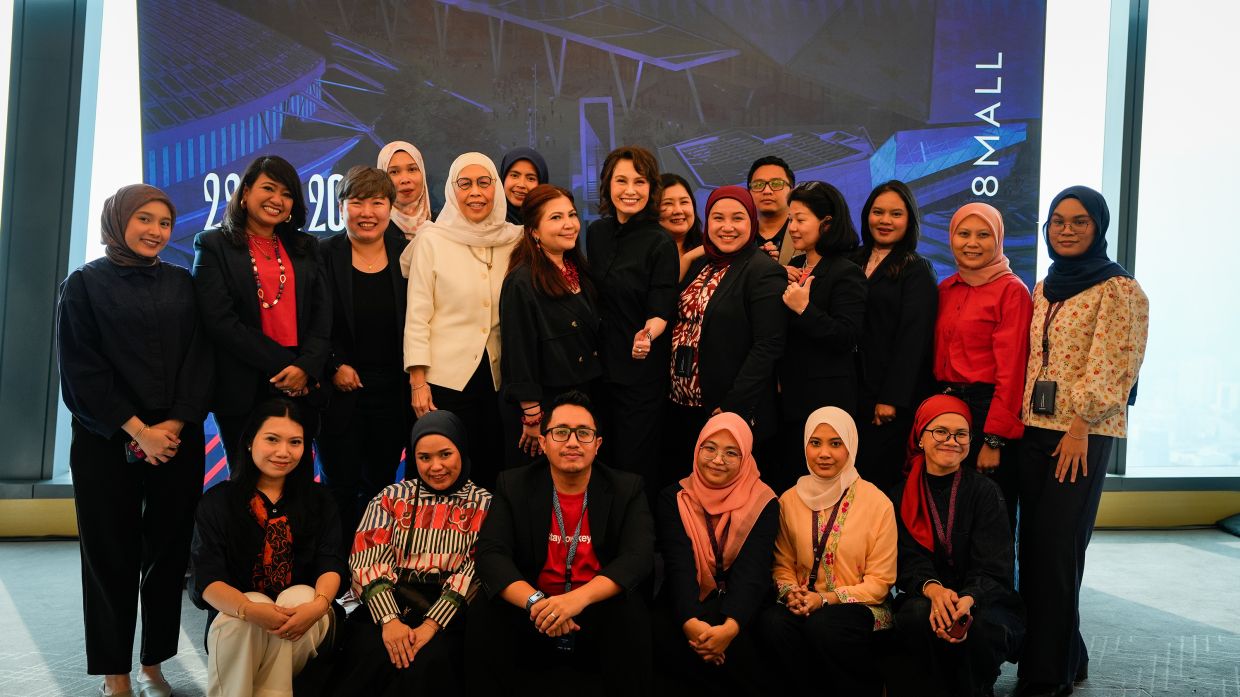
118 Mall has convened its first major retailers' assembly, drawing together more than 200 commercial partners to preview their roles in what developers are positioning as a transformative shopping destination set to open in November 2026. The gathering, held at Park Hyatt Kuala Lumpur, served as a platform for PNB Merdeka Ventures Sdn Bhd to articulate the mall's strategic vision and operational framework to an eclectic roster of fashion, food and beverage, lifestyle and service providers preparing to occupy its spaces.
The retail lineup reflects a deliberate strategy to balance established international brands with homegrown enterprises. Anchor tenants and recognisable names such as Village Grocer, adidas, ALDO, Converse, Foot Locker, Guess and Lacoste underscore the mall's aspirations to compete at a regional level, whilst local operators including Makanism Foodhall, Benjamin Barker, CHAGEE Signature, Best Denki, BookXcess and Babyshop demonstrate commitment to fostering domestic retail innovation. The inclusion of Malaysian Artisan District (M.A.D) brands—enterprises curated to represent local craftsmanship and design—suggests the developers recognise growing consumer appetite for authentic, culturally rooted shopping experiences alongside global convenience.
PNB Merdeka Ventures has engineered 118 Mall as an integral component of the wider Merdeka 118 complex rather than as a standalone shopping centre. Datuk Ir. Ts. Izwan Ibrahim, the company's chief executive officer, articulated this distinction explicitly, emphasising that the mall's competitive advantage rests on the entire precinct's ecosystem rather than retail offerings alone. By interweaving retail with hospitality, tourism, heritage and commercial infrastructure, developers intend to create a multipurpose destination that attracts diverse visitor demographics throughout the day and across seasons—a critical factor in driving consistent footfall that underpins retail profitability.
This integrated approach carries particular significance for Malaysian retail in an era of e-commerce competition and shifting consumer habits. Shopping malls increasingly function as social and cultural anchors rather than purely transactional spaces, and Merdeka 118's positioning acknowledges this reality. Luxury hotel guests, corporate office workers, tourists exploring the heritage precinct and local families seeking entertainment and dining options theoretically create overlapping streams of potential customers, reducing the mall's dependence on any single visitor category and distributing commercial risk more equitably among tenants.
Projections of 22 million annual visitors in the inaugural year represent an ambitious target that warrants contextual scrutiny. This figure—if realised—would position 118 Mall among Southeast Asia's highest-traffic retail destinations, comparable to established megamalls in major metropolitan regions. For Malaysian retailers considering investment in premium leasehold arrangements, such traffic projections carry obvious appeal but also implicit risk should actual visitation patterns diverge materially from forecasts. The diversity of the projected visitor base, however, suggests planners have constructed demand assumptions on relatively robust foundational premises rather than speculative projections.
Sue Wang, 118 Mall's head of retail, outlined the commercial environment awaiting tenant operators, revealing plans for more than 300 retail outlets spanning the seven-storey structure. This inventory size positions the mall as a substantial player in Kuala Lumpur's retail landscape, offering sufficient variety to function as a comprehensive shopping destination rather than a speciality centre. The Malaysian Artisan District component—which will share space with international names—introduces a curatorial dimension that many contemporary malls employ to differentiate themselves in increasingly saturated markets. This hybrid approach recognises that modern consumers often expect both familiar global brands and distinctive local discoveries within a single shopping environment.
The developers have already begun orchestrating marketing infrastructure and promotional mechanics intended to amplify tenant visibility and drive repeat visitation. Digital display networks and event spaces earmarked for brand activations represent investments in what retail specialists term experiential retail infrastructure—amenities that transcend conventional product sales and construct memorable brand encounters. For food and beverage operators particularly, event spaces enable sampling campaigns, product launches and cultural programming that generate social media engagement and word-of-mouth momentum, crucial tools for tenant success in competitive Kuala Lumpur market conditions.
The inaugural retailers' gathering itself functions as a strategic communication tool, signalling to the business community and potential investors that the project has achieved substantive commercial traction and institutional confidence. By assembling a recognisable cohort of established brands, PNB Merdeka Ventures demonstrated to remaining prospective tenants that securing prime space remains attainable whilst also beginning to establish the social proof necessary for successful retail ecosystems. Early adopters and anchor brands effectively validate the concept to later-stage negotiators, creating momentum that extends beyond mere financial incentives.
Geographically, 118 Mall's positioning adjacent to Merdeka 118 situates it within Kuala Lumpur's evolving commercial topology. The proximity to heritage precincts, cultural institutions and the burgeoning central business district suggests urban planners envision this cluster as a mixed-use destination that transcends traditional retail boundaries. Malaysian retail operators evaluating space commitments must ultimately assess not merely the mall's immediate commercial prospects but the broader trajectory of Kuala Lumpur's urban development strategy and whether the Merdeka 118 precinct represents a durable concentration of consumer activity or a temporary development cycle subject to shifting economic dynamics.
The November 2026 timeline extends approximately 20 months from the current developmental moment, providing retailers sufficient lead time for inventory procurement, staff recruitment and store design whilst maintaining momentum toward launch. This temporal window also permits PNB Merdeka Ventures to iterate on operational frameworks based on retailer feedback gathered during preliminary gatherings, potentially enhancing the eventual customer experience and tenant satisfaction. For the broader Malaysian retail sector, 118 Mall's development trajectory offers instructive lessons regarding tenant recruitment, precinct integration and experiential retail design strategies that will likely influence competitive responses from established shopping mall operators throughout the region.

