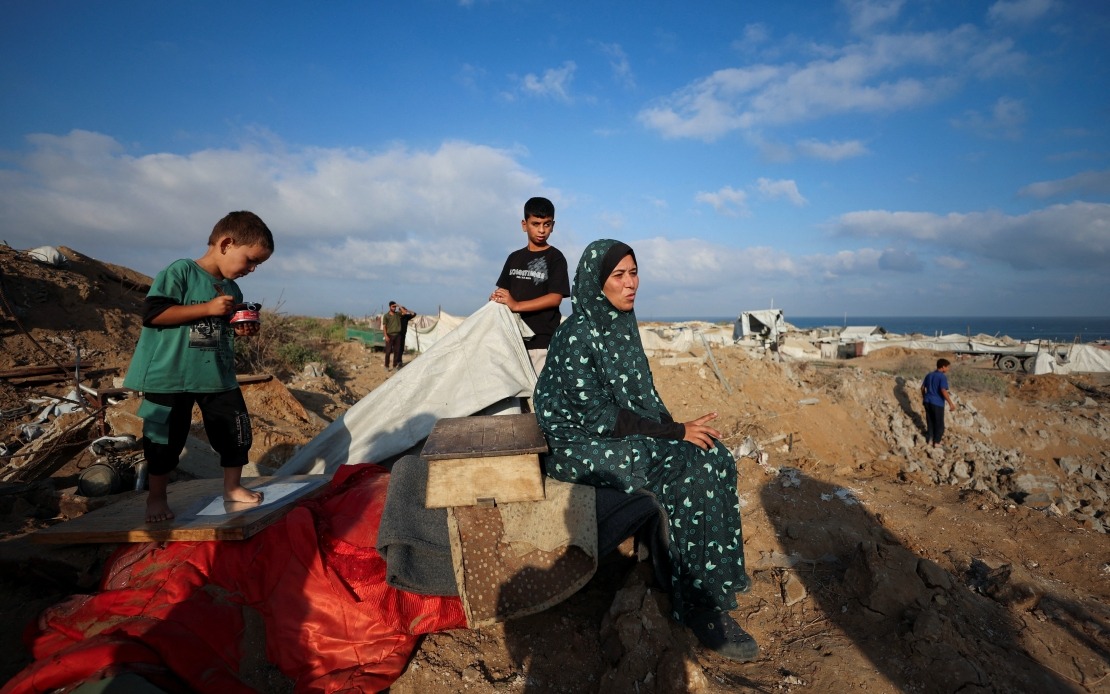
The humanitarian situation in Gaza faces a critical turning point as food insecurity threatens to worsen significantly in the coming months, according to the latest assessment from the Integrated Food Security Phase Classification (IPC). Released on Thursday, the analysis projects that 1.4 million people in the enclave will grapple with severe hunger through the end of 2026, an increase from the 1.2 million documented between mid-April and June. This projection underscores the fragility of recent improvements in the territory, where the October 2025 ceasefire temporarily eased some of the humanitarian pressures that had accumulated during months of intense conflict.
The scale of the food security crisis becomes even more alarming when examined through the lens of population proportions. The IPC assessment indicates that nearly two-thirds of Gaza's population—approximately 67 per cent—will experience either crisis or worse conditions, a figure that reflects the structural collapse of the region's food systems. More critically, some 212,000 people are expected to remain in emergency phase conditions, the second-highest classification on the food security spectrum. The designation of all five governorates within Gaza as operating under crisis conditions represents a blanket failure of local food production and market systems, indicating that no geographic area within the territory has achieved food security stability.
The temporary respite provided by the ceasefire agreement has brought modest gains to the humanitarian landscape. Expanded aid operations following October 2025 did facilitate improvements in food security metrics and nutrition indicators across the population. Food assistance programmes managed to reach approximately 1.49 million people during May alone, representing a significant logistical achievement given the constraints of operating in Gaza. These efforts prevented what could have been a catastrophic deterioration in population nutrition levels and demonstrated that targeted humanitarian intervention can produce measurable results within the compressed timeframe available.
Yet these improvements mask profound structural problems that continue to undermine genuine food security. The IPC's findings reveal that despite aid reaching millions, the rations provided remain inadequate to meet basic nutritional requirements. The wholesale collapse of livelihoods across Gaza compounds the situation, with 83 per cent of households reporting complete absence of income generation opportunities. This figure illustrates the depth of economic destruction in the territory, where traditional employment sectors have been severely disrupted. The dependency on external humanitarian assistance has shifted from temporary crisis response to permanent economic reality for the vast majority of Gaza's population, a troubling development that suggests years of recovery work will be necessary before local economies can function independently.
A more ominous development threatens to reverse the modest progress achieved since the ceasefire. Humanitarian assistance levels have declined markedly since February 2026, driven by funding constraints that have forced international organisations to scale back operations. The uncertainty surrounding the operational permissions and security guarantees for aid organisations compounds this challenge, creating a situation where even organisations with available resources cannot guarantee sustained programme delivery. This combination of insufficient funding and operational uncertainty creates a precarious foundation for continued assistance, raising the possibility that the window of stability opened by the ceasefire could close rapidly if external support erodes further.
The implications of losing humanitarian assistance entirely would be devastating according to IPC projections. Should food aid stop completely, approximately 1.9 million people—representing roughly 90 per cent of Gaza's total population—would face acute food insecurity through December 2026. This figure serves as a powerful illustration of how comprehensively the territory has become dependent on external support, and how completely local food systems have ceased to function as autonomous mechanisms for survival. The projection underscores that without continuous international intervention, the humanitarian situation would deteriorate to near-universal food insecurity across the enclave.
The vulnerability of Gaza's youngest and most fragile populations demands particular attention. The IPC analysis projects that 74,200 children under five years of age will require treatment for acute malnutrition by April 2027, with 11,432 of these cases classified as severe. Malnutrition in early childhood carries lifelong consequences for physical development, cognitive function, and long-term health outcomes, meaning that the current food security crisis will generate health burdens extending decades into the future. Beyond children, approximately 24,600 pregnant and breastfeeding women require urgent nutritional support, indicating that the crisis threatens the health of mothers and the next generation simultaneously. These figures reveal how food insecurity compounds across vulnerable populations, creating cascading health challenges.
The geographic proximity of Gaza to Malaysia's established humanitarian partnerships and regional influence positions Southeast Asian nations as stakeholders in Gaza's recovery trajectory. The IPC's call for sustained humanitarian access, expanded nutrition programmes, and permanent cessation of hostilities represents the foundational requirements for preventing further deterioration. Yet these recommendations require international cooperation and sustained political will from donor nations to maintain funding and operational support for aid agencies. Malaysia, with its experience in coordinating humanitarian responses and its standing in non-aligned circles, could contribute to international efforts to sustain assistance and ensure that the ceasefire framework creates genuine space for reconstruction rather than merely postponing further conflict.
The distinction between the current trajectory and potential worst-case scenarios depends entirely on external variables beyond Gaza's population control. If international funding remains available and operational security allows aid organisations to function, the 1.4 million figure represents the baseline challenge. If external support collapses, the crisis could expand nearly fivefold in population coverage. This contingency highlights how humanitarian crises in the Middle East remain intrinsically linked to international decision-making, funding commitments, and geopolitical stability. The coming months will determine whether the October 2025 ceasefire represents a genuine turning point toward stabilisation or merely a temporary reprieve before conditions deteriorate further.

